
Every so often, people seem to walk away from history.
Image composed by the author in Edinburgh. Click on the image for more detail. © 2009-2015 myurbanist. All Rights Reserved. Do not copy.

Every so often, people seem to walk away from history.
Image composed by the author in Edinburgh. Click on the image for more detail. © 2009-2015 myurbanist. All Rights Reserved. Do not copy.
During a year filled with four trips abroad and two months away, many of my 2014 Facebook cover photos helped fill my yearly urban and exurban diaries.
Themes address the overlapping (and therefore hardly mutually exclusive) nuances of habitation, history, cityscape, landscape and ecology.
France, Italy, Monaco, Scotland, Spain and the United States all unfold below according to these categories, in a fashion intended to memorialize an extraordinary 2014.
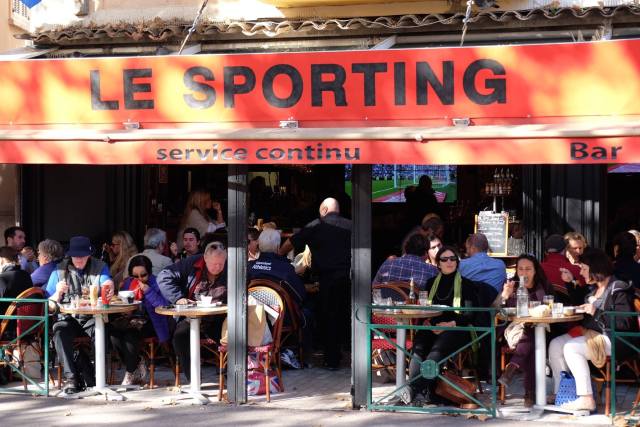


All images composed by the author. Click on each image for more detail. © 2009-2015 myurbanist. All Rights Reserved. Do not copy.
For more information on the role of personal experience in understanding the changing city, see Urbanism Without Effort, an e-book from Island Press.
Third in an illustrated series about place-decoding from the South of France.

Today, many promote urban walkability, but for several years, I have focused on inter-urban, or, even inter-settlement walkability. Strolls through such “places between” not only highlight the virtues of walking itself, but also invoke the universal transitions between distinct locales and the amorphous rural countryside.
Understanding the blend between built and natural, including how balances change closer to clustered settlement, is key to defining sustainable cities going forward.
New urbanists seized on this notion long ago and built new approaches to planning and zoning around the borrowed biological principle of the “transect“. But my purpose here is more observational and humanistic, and to illustrate the dynamic of the “places between” in the context of the “place-decoding” approach that I began exploring earlier this month.
Between towns, it seems there is always a microcosm of similar characteristics defining the edge of urbanity.
Last year I wrote about a Washington State perspective in the Palouse region on the Idaho border, and stressed dissection of the farm-to-market basis for why and how many cities grew, and the reasons forests and farms have been elemental to growth management legislation. I suggested that modern legislative approaches essentially emulate the naturally evolved agricultural region that has always surrounded the City of Rome.
But, as the Rome reference suggests, I believe that inter-urban walkability often resonates best outside of the United States, between towns that grew up at a walkable distance between each other—unremarkably in a mountain valley—or along roads left from civilizations where armies marched home along routes where country became city or town along the way.
 One example invokes Rome again. In my Urbanism Without Effort book talks, I like to relate the “Via Appia Method” of place decoding. Take a train several kilometers out from Rome, and walk into the city through regional parkland on the Via Appia, and witness 2000 years of human universals along the way. Burial places of old merge with suburban villas and tourist buses, agriculture and greenbelts abut now over-trafficked country roads.
Another example is farther north in Italy. I’ve also written about the “essence of urbanism” presented by the Cinque Terre towns of Liguria, joined by waterside pedestrian trail, and experienced the even more dramatic Sentiero d’egli dei through steep, cultivated Amalfi coast land between Positano and Amalfi.
And as a capstone last week, I observed the subtleties of the inter-settlement landscape in and around Quenza and Zonza—two proximate small Southern Corsican mountain towns of the Alta Rocca with populations of some 200 and 2000 inhabitants, respectively. A five-hour loop hike between Quenza, a small, declining-in-population village, and Zonza, a more touristic, mountain sports-oriented focal point, invited place-decoding of the microcosm outlined above: From artifacts of religion to agriculture to the cemeteries and leave-behinds that classically occur at the edge of town.


Last year, in the Palouse, I underscored how the elements of older, rural America have reappeared in today’s cities, noting how “small markets, the local bar, the library and the school — no longer needed in one context, they rise again in reinvented urban settings…”.
And last week on Corsica, walking to and from the place between places, I read human fundamentals, as illustrated in the images presented here, in a way that even more firmly decodes and illustrates the elements of urban settlement.
The ebb and flow of nature, economic base and the passage of time are always ripe for observation. Below, take note of one walk’s illustration of two towns, their edges and the spaces between.

The natural transect, the moniker of urban transition


Agriculture, cemeteries and abandoned vehicles on the urban edge—an organic zoning without effort

Fences/property division: an indicator that at some point, the commons disappeared

Religious structures are definitional in Quenza, this one for 1000 years

Zonza, renewed commerce at the core

Tourism is the new economy of survival in rough, now recreational terrain
Images composed by the author along the Via Appia entering Rome, and in Quenza and Zonza, Corsica, France. Click on the image for more detail. © 2009-2014 myurbanist. All Rights Reserved. Do not copy.
Coming next: Decoding the elements of a street in Cassis.
For more information on the role of personal experience in understanding the changing city, see Urbanism Without Effort, an e-book from Island Press.
Second in an illustrated series about place-decoding from the South of France.

Sensing the city is a personal experience owned by each of us. From a legal perspective, it is an urban property right that transcends public and private domains. It is a form of place-decoding that deserves more illustration and attention.
To see and smell the city is an affordable lease, easement or license across space and time, and it is too easily manipulated by other forces, such as intentional design or the accretion of organic forces of growth or decline.
One critical element of place-decoding is understanding who, respectively, are the leaders and followers in the urban experiential adventure.
My ongoing work in France (outlined here) reminds me that this form of place-decoding is critical to each of our experiences, but it is not easy to capture without treating urban places as classrooms for exploration. This may explain why we often choose to institutionalize the path of least resistance (such as yielding to a directed response or championing others’ essays on the zen of walking and biking), rather than foster self-directed efforts to allow each of us to realize our own sensations and experiences.
In Grasse, Provence, street odors are changeable near the Fragonard parfumerie. Why? Because an Orwellian, directed scent, as illustrated below, dispenses fragrance across a narrow, pedestrian street. Shoppers, caught in post-hypnotic strolls, cannot escape the medieval, odor-masking reality of perfume’s very purpose.

In this case, a deodorant of the street manipulates the observer, externally directing the right to experience described above. The urban observer has no cognitive choice other than to leave, or ignore the smell.
In the multi-layered city such as Bastia, Corsica, small pockets of old blend with the new, and lines of sight span the ages and associated technologies.
As shown below, in the two images below, a glance at topography can show either a hill town setting in isolation, a traffic-laden city, or both. One person may see historic urban form up the hill. Another may see a roundabout of automobiles in context, with little regard to the pre-spawl relic above.


Here, the urban observer has more choice than in the Grasse example to sense for oneself, and more readily understand the mind’s eye.
I’ve said before that we should pay more attention to the place-receivers of placemaking, through encouraging urban diaries that lead us all to better understand where we live, work and travel between. However appropriate the urbanist purpose, we cannot rest simply with the cutting edge, activist goals of bus and bicycle without a more holistic, experiential point of view.
I believe part of the answer is simply enhancing people’s ability to sense the city. More apps, tools and activities all go without saying; examples include Adelaide, Australia’s well-presented “Picture Adelaide 2040” project, Stage 1 of which centers on gathering 1000 stories from citizens (each with a photo) on how they use their favorite urban places.
But “how-to’s”, such as community classes, meet-ups, school curricula, training of political officials and sensitizing of loan officers is also what I have in mind.
We can urge our political leaders, our planners, our designers and real estate professionals that encouraging people to sense the city deserves a high priority in policies, plans and pro-formas. Better cities will not result from a mandated smell this, or see that mindset.
Rather, better cities are more apt to happen if we first learn how to smell and see, a Place-Decoding 101 class affordable to all.
Coming next: How walking between towns decodes the elements of place.
Images composed by the author in Grasse, and Bastia, Corsica, France. Click on the image for more detail. © 2009-2014 myurbanist. All Rights Reserved. Do not copy.
For more information on the role of personal experience in understanding the changing city, see Urbanism Without Effort, an e-book from Island Press.
A footnote to the new series, in the urban world, juxtapositions matter

In 1997, I returned to Europe after a long absence. My Paris photograph, above, jump-started a then-dormant fascination with the scenery of urban life and form.
I later digitized the photograph, to enhance internal contrasts between the Eiffel Tower, the layered scene on the Pont d’léna and the Champs de Mars beyond. My goal? An indelible impression, evoking a provocative, dream-like quality, consistent with a profound place-based memory.
Call this informal process “place-receiving”, and not placemaking.
Is place-receiving composed of unique occurrences, limited only to when and where we, the users, find them? Can they be replicated? If so, how?
These questions raise a practical side—and a real challenge—in assuring that placemaking efforts dovetail with the human nature of place-receiving described here.
The challenge comes from today’s renewed interest in creating special urban places for people—whether public, private or somewhere between—often offered by design professionals or related consultants.
Sometimes, the look and feel of a remade urban place is not consistent with the human perceptions common to place receiving. A quick example from my hometown: Assertions that downtown redevelopment approaches and several features of the Seattle waterfront plan just don’t fit the context of local climate, local history and likely end users.
Sixteen years later, disassembling the Paris photograph, I see many central elements of what urban visitors, residents and design professionals aspire to, whether resulting from spontaneity, casual tactics, or more purposeful plans. The photograph suggests several words well within the vocabularies of placemaking, complete streets, green infrastructure or human-scale approaches.
Some summaries of these elements seem stale and full of labels. Others evoke emotion through climate, color and the built environment. Here are just five examples:
Other summaries could be more poetic, or more human in focus. And perhaps they should, because place and place-receiving occur as much in our minds as in the real world.
My take? In the end, we should focus more on place-receivers as the most authentic stakeholders of meaning in the urban experience. If people cannot place-receive with a sense of acceptance and inspiration, placemaking may mean very little indeed.
Image composed by the author in Paris in December, 1997. Click on the image for more detail. © 2009-2014 myurbanist. All Rights Reserved. Do not copy.
For more information on the role of personal experience in understanding the changing city,see Urbanism Without Effort, an e-book from Island Press.