from urbanizing to urbanism, 2014, according to Facebook cover photos

During a year filled with four trips abroad and two months away, many of my 2014 Facebook cover photos helped fill my yearly urban and exurban diaries.

Themes address the overlapping (and therefore hardly mutually exclusive) nuances of habitation, history, cityscape, landscape and ecology.

France, Italy, Monaco, Scotland, Spain and the United States all unfold below according to these categories, in a fashion intended to memorialize an extraordinary 2014.

Habitation

Saint-Tropez
Saint-Tropez
Seattle Haircut
Seattle Haircut
Milan
Milan
Paris
Paris
Oban, Scotland
Oban, Scotland
Seattle, Lake City Way
In Marjorie, Seattle
The Ice Cream Laundromat, Seattle
Madrona Scene, Seattle
Seattle, Fifth Avenue
Nice, France Summertime
On Lake Union, Seattle
Vaison la Romaine
Vaison la Romaine
Seattle Bench
Seattle Bench
Roslyn, Washington
Roslyn, Washington

History

Jaca, Spain
Jaca, Spain
St. Andrews, Scotland
Seattle Art Museum
Seattle Art Museum

Cityscape

Saint-Tropez
Saint-Tropez
Skyline, Bellevue, Washington
Seattle Skyline
Seattle Skyline
The Promenade, Nice
The Promenade, Nice
Monte Carlo
Monte Carlo
Edinburgh Panorama
Edinburgh Panorama
Glasgow, River Clyde
Glasgow
Glasgow
Seattle, Sheraton and Sky
Ballard Bridge, Seattle

Landscape

Sunset Provençal
Sunset Provençal
Riviera from Afar
Riviera from Afar
From Spain to France
In the Palouse I
In the Palouse I
In the Palouse II
In the Palouse II

Ecology

Seattle
Seattle
Lake and Mountain, Seattle
Mount Rainier from Seattle
On Lake Washington, Seattle
Near Kirkland, Washington

All images composed by the author. Click on each image for more detail. © 2009-2015 myurbanist. All Rights Reserved. Do not copy.

For more information on the role of personal experience in understanding the changing city, see Urbanism Without Effort, an e-book from Island Press.

‘inevitably urban’ and the role of the people

InevitablyUrban_ChuckWolfe101

Inevitable Urban Times

These times seem so inevitably urban.  Of course, my wry remark comes from a city-dweller in a post-recessionary Seattle, where new construction appears at every turn.

Here, civic dialogue focuses on the social repercussions of growth, such as affordability of urban housing (“build more“, said yesterday’s Seattle Times), the proper range of housing types, and how residents will travel from here to there.

These are also times to think again about how to “create scalable solutions for city leaders to share with their constituencies across the world”, according to The Atlantic’s CityLab 2014 event underway now in Los Angeles.

InevitablyUrban_ChuckWolfe17

Attention to human opportunities in the city is now commonplace, with recurring urbanism, placemaking and urban innovation events like CityLab 2014, The Placemaking Leadership Council and The Future of Places all occurring within the last month. Proffered solutions abound, aided by technology, applications and provocative presentations, both live and online.

Oratory and Shakespeare Define the City

But it’s worth remembering that inquiry about the how to fulfill human opportunities is longstanding. There is undeniable precedent in storied oratory, arguably the internet of ancient times.

The Greek poet, Alcaeus of Mytilene (680-511 BC) (as reported by Roman-era sophist Aelius Aristides in later oratory) established human opportunities as central to his definition of the city:

Not houses finely roofed or the stones of walls well builded, nay nor canals and dockyards make the city, but men [sic] able to use their opportunity [emphasis added].

Sound familiar?

The human part of the built environment has echoed in other, much-quoted prose. Beyond the Greek sophists and orators (themselves criticized for educating only those who could afford the price), Shakespeare’s better known quotation, from Coriolanus, Act 3, Scene 1, also set the tone:

“What is the city but the people?”

What I Learned About Cities

In my case, personal background complements history.

In one of his last presentations, at a major “21st Century City” conference he helped organize in 1988 in Phoenix, my father (late Urban Planning Professor Myer R. Wolfe) quoted Alcaeus in his holistic conference keynote remarks.

How, he asked, can interdisciplinary forces be marshaled to make an accessible urban form (citing Alcaeus’ human “opportunities”) for the 21st century? “The question has to be asked—opportunities for what?”, he noted, pointing to, inter alia, limitations on quality of life inherent in long commutes and related life choices,  issues of density v. intensity, as well as urban character across both urban and suburban patterns. (See The City of the 21st Century, M. Pihlak, Ed., Arizona State University, 1988).

In reviewing those remarks just yesterday, his references both to Greek oratory and his predictive questions about this century sent me searching for universal, human imagery. Because it’s the people who define the city, we should look at them, closely.

It’s the People, Stupid

I have compiled 25 photographs for this essay—taken in multiple locations since 2009, including cities on four continents.  The photographs are presented in black and white, to better show the contrast between the human and built environment, yet also emphasize the undeniably symmetry between.

InevitablyUrban_ChuckWolfe03

My intentions are simple:

First, I want to straightforwardly illustrate fundamental traits of city dwellers across cultures, distance and time. Such traits include talking, eating, singing, watching, shopping, walking, sitting, learning, growing and aging, seeking shelter from climate, and blending with technologies of communication, travel and illumination.

Second, beyond the other ample media available to assess city life and prospects, I want to challenge the reader to think about how best to maximize the opportunities for those pictured, and those around us, and to realistically assess what we see.

As explained here, this story of “urban inevitability” has traveled through sophism—a once-revered (albeit privileged) form of teaching, across the ages. But the very point of such sophism—defining the city on human terms—should not morph to “sophistry”, a more modern term reflective of deceit and specious debate.

Finally, Just Look at the People and Learn

Here’s hoping that the interspersed photographs above and below will illustrate what Alcaeus meant long ago, as revisited in 1988 by my father and in new forms, through the gatherings and events today.

I would venture that to be “able to use the opportunity” of the city is a perpetual challenge best observed in the conduct of the users themselves.

InevitablyUrban_ChuckWolfe111


InevitablyUrban_ChuckWolfe04

InevitablyUrban_ChuckWolfe06

InevitablyUrban_ChuckWolfe07

InevitablyUrban_ChuckWolfe09

InevitablyUrban_ChuckWolfe10

InevitablyUrban_ChuckWolfe11

InevitablyUrban_ChuckWolfe12

InevitablyUrban_ChuckWolfe13

InevitablyUrban_ChuckWolfe14

InevitablyUrban_ChuckWolfe15

InevitablyUrban_ChuckWolfe16

P1010227

More Carmelite Market--on Shabat

InevitablyUrban_ChuckWolfe18

InevitablyUrban_ChuckWolfe19

InevitablyUrban_ChuckWolfe20

OLYMPUS DIGITAL CAMERA

OLYMPUS DIGITAL CAMERA

OLYMPUS DIGITAL CAMERA

InevitablyUrban_ChuckWolfe24

InevitablyUrban_ChuckWolfe25

Images composed by the author in Antibes, Arles, Frejus, Grasse and Nice, France; Tel Aviv, Israel; London, UK; Aveiro, Lisbon and Porto, Portugal; Arusha, Tanzania, and Seattle, USA. Click on the image for more detail. © 2009-2014 myurbanist.  All Rights Reserved. Do not copy.

For more information on the role of personal experience in understanding the changing city, see Urbanism Without Effort, an e-book from Island Press.

choosing place-receiving over placemaking, and why

A footnote to the new series, in the urban world, juxtapositions matter

IconicParis1997_ChuckWolfe1

In 1997, I returned to Europe after a long absence. My Paris photograph, above, jump-started a then-dormant fascination with the scenery of urban life and form.

I later digitized the photograph, to enhance internal contrasts between the Eiffel Tower, the layered scene on the Pont d’léna and the Champs de Mars beyond. My goal? An indelible impression, evoking a provocative, dream-like quality, consistent with a profound place-based memory.

Call this informal process “place-receiving”, and not placemaking.

Is place-receiving composed of unique occurrences, limited only to when and where we, the users, find them? Can they be replicated? If so, how?

These questions raise a practical side—and a real challenge—in assuring that placemaking efforts dovetail with the human nature of place-receiving described here.

The challenge comes from today’s renewed interest in creating special urban places for people—whether public, private or somewhere between—often offered by design professionals or related consultants.

Sometimes, the look and feel of a remade urban place is not consistent with the human perceptions common to place receiving. A quick example from my hometown:  Assertions that downtown redevelopment approaches and several features of the Seattle waterfront plan just don’t fit the context of local climate, local history and likely end users.

Sixteen years later, disassembling the Paris photograph, I see many central elements of what urban visitors, residents and design professionals aspire to, whether resulting from spontaneity, casual tactics, or more purposeful plans.  The photograph suggests several words well within the vocabularies of placemaking, complete streets, green infrastructure or human-scale approaches.

Some summaries of these elements seem stale and full of labels.  Others evoke emotion through climate, color and the built environment.  Here are just five examples:

  • The pavement dramatically mirrors people approaching the Eiffel Tower on the Pont d’léna.
  • The Eiffel Tower, the Pont d’léna, an equestrian statue, cars, buses and people combine to enhance  a Paris view and experience.
  • The grainy textures of infrastructure stand out along the Seine.
  • Water and pavement blend in Paris.
  • A red bus and red backpack stand out against the Pont d’léna, the base of the Eiffel Tower and the expanse of the Champs de Mars.

Other summaries could be more poetic, or more human in focus.  And perhaps they should, because  place and place-receiving occur as much in our minds as in the real world.

My take?  In the end, we should focus more on place-receivers as the most authentic stakeholders of meaning in the urban experience. If people cannot place-receive with a sense of acceptance and inspiration, placemaking may mean very little indeed.

Image composed by the author in Paris in December, 1997.  Click on the image for more detail. © 2009-2014 myurbanist.  All Rights Reserved. Do not copy.

For more information on the role of personal experience in understanding the changing city,see Urbanism Without Effort, an e-book from Island Press.
visualizing regulatory change in the urban setting

Fourth in the new series, in the urban world, juxtapositions matter

UrbJuxta4_ChuckWolfe

UrbJuxta5_ChuckWolfe

The first entry in this series described the importance of multiple forms of juxtapositions in urban settings, and emphasized the importance of reading such overlays and overlaps as a basic aid to policy, governance and regulation.

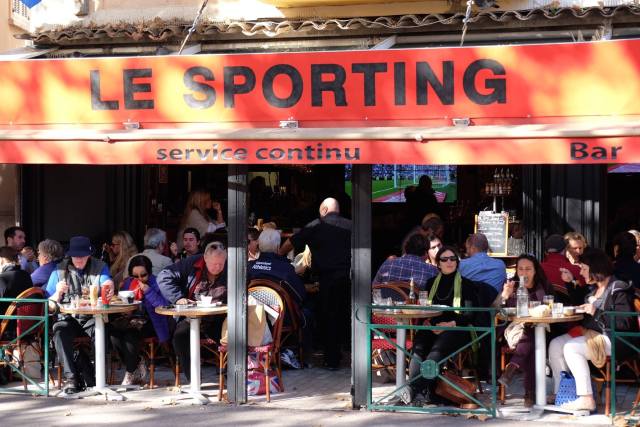
In particular, reading the overlay of regulatory change on urban spaces is easier than you might think. Ready snapshots illustrate changing socio-cultural practices, co-reflected in the evolving regulation of public venues.

The photographs above show two simple examples of this overlay. In summary, pictured here are two visual byproducts of overlaying and evolving regulatory schemes, focused at the human scale, rather than more typical parameters of building height, bulk and density.

In the first, more common example, an active sidewalk scene benefits from relaxation of enforcement practices regarding sidewalk spaces. Revised policies or regulations (either before or after the fact) enhance such visual results.

The second example results from legalized marijuana use in Washington State—call the scene “a vignette of tolerance”. Such scenes are not uncommon while cities around the state evaluate further regulatory approaches to venues for marijuana sale, use and consumption.

There are purposely no before and after images here—the point is to review the photographs and contemplate the appearance of different bounds of permitted uses in the not so distant past, from empty sidewalks to interventions of police and prosecutor.

Consider, also, the visual possibilities of the overlay of regulatory change some years from now.

Images composed by the author in Seattle. Click on the image for more detail. © 2009-2014 myurbanistAll Rights Reserved. Do not copy.

For more information on the role of personal experience in understanding the changing city, see Urbanism Without Effortan e-book from Island Press.

how places survive, the movie idea

Earlier this week, in “contrasting two models of how places survive“, I compared two ways town forms can survive—by idea and in actual physical form—and underscored  the truly critical ingredient, the people.

If that post (which also appeared in The Huffington Post, here) could be put to film, the trailer would look something like the recently updated, embedded video below.

Perhaps it’s time to take the idea to fruition, and produce the real thing.

Video composed by the author in Eastern Connecticut. Click on the image for more detail. © 2009-2013 myurbanist. All Rights Reserved. Do not copy.

For more information on the role of personal experience in understanding the changing city, see Urbanism Without Effortan e-book from Island Press.