street scene complexities: “what was and what will be”

The complexities of a street scene–with often divergent and seemingly incompatible features–reflect the layers of social and cultural influence over time and place.

DSC_0417
How else could a very British phone booth in a former colony contrast with the vernacular splendor of a church square?
DSC_0211
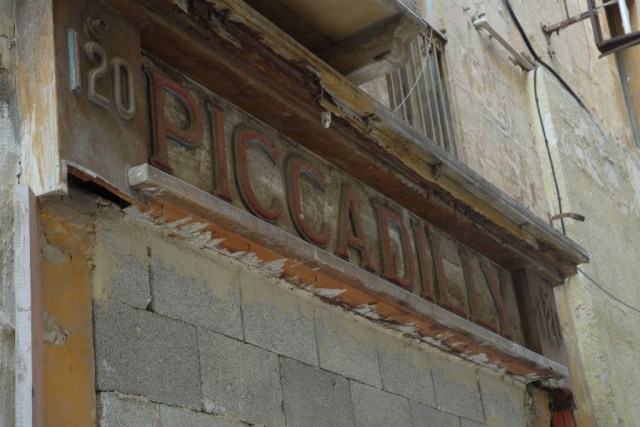
Why else would an abandoned watering hole of British sailors still advertise the name of a distant London gathering place?
DSC_1394_2
Is it inevitable that McDonald’s and a traditional religious center would mix on the French Riviera?

DSC_0076
And must American ice cream from Vermont merge with gelato in the Mediterranean?

In the words of France’s Luc Gaudet, “[w]e are only but a mixture of what was and what will be”. The challenge going forward is to plan for such inevitability, and create places that successfully capture legacies, current trends and a sense of the future.

How do Seattle examples such as Ballard, Fremont, Capitol Hill, Columbia City and Belltown align with Gaudet?
not so long ago, someone asked about planning in Seattle…

On September 10, planetizen noted the September 9 Crosscut article by myurbanist’s alter ego. Soon, we’ll know the answer.

the quotation for Copenhagen: “What is the use of a [fine] house if you haven’t got a tolerable planet to put it on?”

On the way to Copenhagen and current focus on climate change, the familiar Thoreau quotation has been renewed by many. Images can remind us of past relationships of housing, changing modes of transportation and the planet, and provide backdrop for current progressive norms which advocate for a more sustainable future.

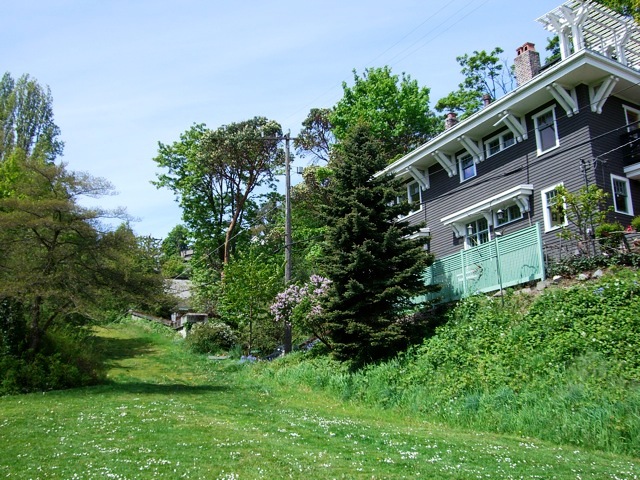
In Seattle, housing still graces the path of the cable car that ascended Yesler and ended in Frink Park above Leschi, from 1888 until replaced by buses in 1940:

CIMG0072CIMG0073

Across the world, two Italian images from former donkey trails–now walking paths–show a farmhouse between Monterosso and Vernazza in the Cinque Terre, and an abandoned stone structure on the Sentiero degli dei on the Amalfi Coast. DSC_0126DSC_0059

Going forward, as we adapt transportation and land use patterns to continue goals of emission reduction, can we use these “anachronistic landscapes” (about which J.B. Jackson and others have written) in concert with Seattle’s pending Comprehensive Plan update and companion plans and programs in order to craft a vision of the post-Copenhagen future?

storefronts we want on our streets, part 1

From Lucera, Italy, Carlo Cozzolino says it all.

DSC_0378

DSC_0376